Antoine Amarilli
INRIA Lille
Making database research sustainable
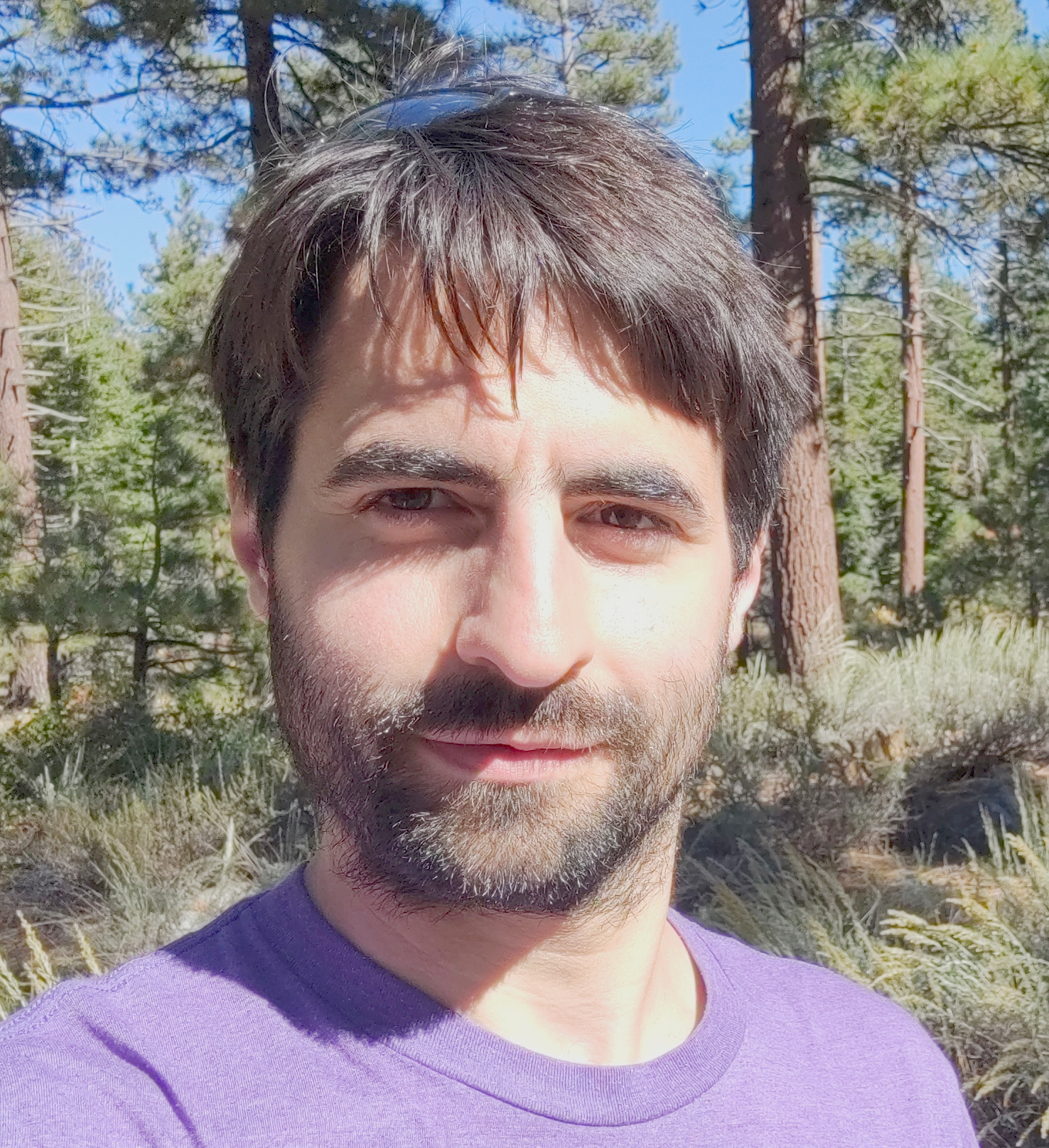
Abstract: This talk will discuss the sustainability of database research from the angle of our research practices. It will focus on the metric of greenhouse gas emissions to measure contribution to global warming, and will focus on the question of international travel to attend conferences and other scientific events. The talk will review academic travel customs and existing research about them, the carbon footprint of academic conferences and how to measure it, the possible levels at which action can happen (individuals, universities, funding agencies, scholarly societies), the landscape of existing initiatives, and ongoing debates and challenges.
Bio: Antoine Amarilli holds an Advanced Research Position at Inria Lille in France, and is on leave from an associate professor position at Télécom Paris. He studied at École Normale Supérieure and received his PhD in 2016 from Télécom Paris, for which he was awarded a Beth Dissertation Award. His current research focuses on database theory and theoretical computer science; he received his habilitation from Institut Polytechnique de Paris in 2023. He co-authored works which received best paper awards at the ICDT conference in 2020 and at the ICALP 2021 conference (track B). He is the environmental chair of the informal conference “Highlights of Logic, Games, and Automata”, he is one of the animators of the TCS4F pledge https://tcs4f.org/, and he is a vice-president of EATCS. His commitments towards sustainability include not traveling by plane except for long scientific stays (since 2020) and not reviewing for conferences with formal proceedings that require in-person travel (since 2023).
Michał Bodziony
IBM
Unifying Data Access at Scale: Driving Efficiency and Sustainability with Apache Arrow
Abstract: In today’s complex architectures, integrating diverse data systems—such as RDBMS, object storages, filesystems, messaging queues, and various APIs—often leads to performance bottlenecks and excessive resource consumption. This session explores a large-scale data unification layer, currently utilized by dozens of services, designed to streamline connectivity and empower businesses with robust data integration capabilities. By standardizing the common data format on Apache Arrow and leveraging the Apache Arrow Flight framework for high-speed data transfer, this unified architecture drastically optimizes data integration workloads.
During this presentation, we will examine the significant scale of direct savings achieved across CPU utilization, network traffic, and estimated energy consumption. Furthermore, the session will highlight the critical indirect energy and cost savings realized through shorter, more efficient development cycles when integrating new data sources.
Bio: Michał Bodziony is an IBM software architect in the domain of data integration responsible for the common connectivity layer, unifying access to external data sources for solutions like Cloud Pak for Data (CPD) and watsonx.data. Building his IT expertise since 2000 and working continuously at IBM since 2005, he has held key roles as a security, performance, and software architect. Recognized as an IBM Master Inventor, Michał has authored over 30 patents in data integration, performance optimization, security, and machine learning. For years, his work has been dedicated to optimizing data integration workload processing, with a strong emphasis on minimizing overall resource and time consumption.
Khuzaima Daudjee
University of Waterloo
Resource-Efficient Data Systems
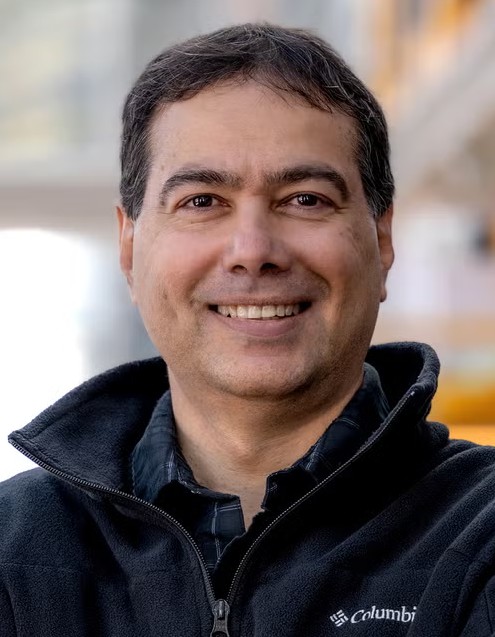
Abstract: I will present some principled approaches to data system design with a focus on building resource-efficient systems,
Bio: Khuzaima is interested in designing and building large-scale systems that store and manage data, including provision of system-level support for data-intensive applications such as streaming, graph processing and machine learning. He is an ACM Distinguished Scientist.
Bettina Kemme
McGill University
Sustainability in Data Science: from Analysis to Action
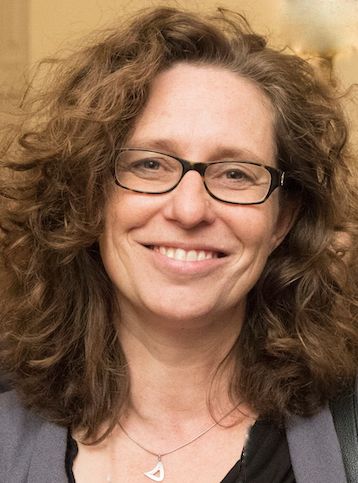
Abstract: Data Science has become increasingly data and processing hungry. As such, it has become a pressing need to include energy awareness and environmental sustainability into the Data Science life cycle. In fact, a considerable amount of research efforts have been conducted in this direction, both for data management and machine learning. The first part of the lecture will discuss various mechanisms to assess the environmental impact of data manipulation, from power and energy consumption to carbon footprint. This will be put in relation to more traditional system performance metrics such as runtime, throughput and scalability or the “goodness” of a data science solution, measured by metrics such as accuracy. From there, the lecture will provide an overview of principled mechanisms to reduce energy consumption and/or carbon footprint, such as temporal and spatial workload shifting, hardware awareness, load balancing and resource allocation.
Bio: Bettina Kemme is a Professor of the School of Computer Science at McGill University, Montreal, where she leads the Distributed Information Systems lab. Her general research interests lie in large-scale data management and distributed computing. Her recent projects involved graph-based database management, sustainable data systems for data science, and platform support for advanced data analytics. Bettina holds a PhD degree in Computer Science from ETH Zurich and an undergraduate degree from the Friedrich-Alexander-Universität Erlangen, Germany. She has published well over 100 publications in major journals and conferences in the areas of database systems and distributed systems, including a VLDB Test-of-Time award and a best paper award (runner up). She has served on the editorial board of the VLDB Journal and Information Systems and has been on the program committee or area chair of major database and distributed systems conferences. She was the PC Co-Chair of Middleware 2017, DEBS 2023 and EDBT 2025, and is a senior IEEE member. She co-created the Canadian Workshop series on Data Systems meet Data Science (DSDS).
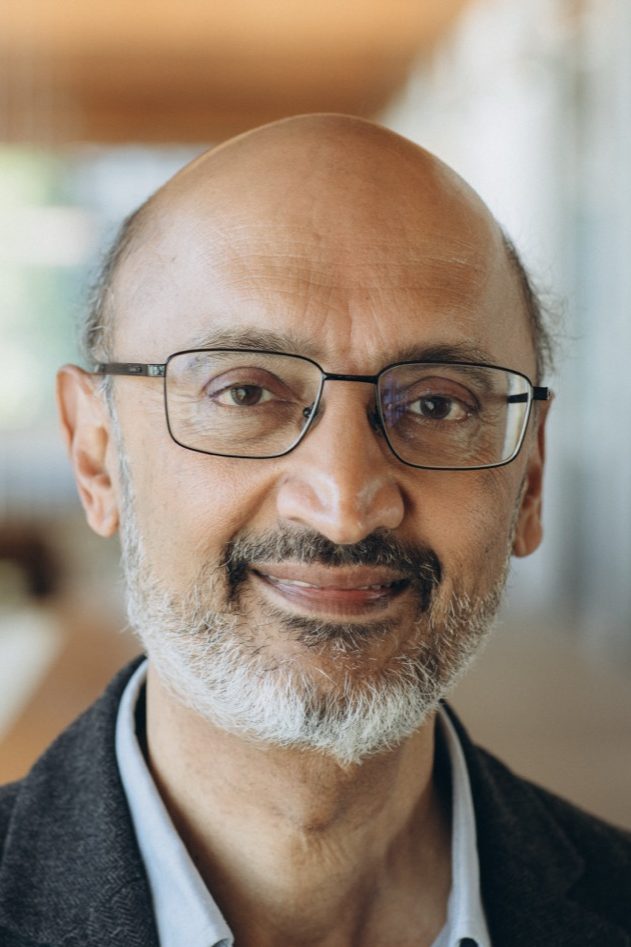
Srinivasan Keshav
University of Cambridge
Is there hope for the climate?
Abstract: With what seems to be a perpetually growing dependency on oil despite crisis after crisis, a global retrenchment from clean energy commitments, and a steadily rising carbon dioxide concentration in the atmosphere, climate activists and the general public alike seem to have little reason for hope. Are we consigned to a fate of climate extremes and human suffering? In this lecture, I will argue that rapid advances in renewable energy sources such as solar and wind, combined with the declining cost of storage, do give us reason for hope. Critically, computer science and computer scientists will play a huge role in the future energy system, making them essential to its infrastructure. I will outline this role and describe some open research challenges that await resolution.
Bio: Srinivasan Keshav is the Robert Sansom Professor of Computer Science in the Department of Computer Science and Technology at the University of Cambridge. His interests lie broadly at the intersection of computer science and sustainability. He received a Ph.D. in Computer Science from the University of California, Berkeley in 1991 and was subsequently employed at AT&T Bell Labs and Cornell University. Most recently, he was a Professor at the University of Waterloo in Canada. He is a Fellow of the Royal Society, the Royal Society of Canada, the Association for Computing Machinery, and the Institute of Electrical and Electronic Engineers, and a Distinguished Alumnus of the Indian Institute of Technology, Delhi.
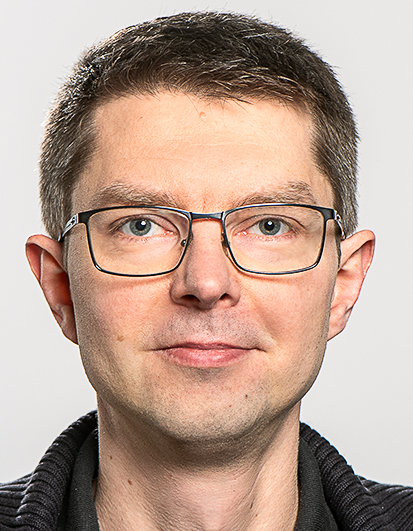
Viktor Leis
TU Munich
Cost as a Design Principle for Sustainable Cloud Database Systems
Abstract: The premise of this talk is that cost must be treated as a first-class design objective when building cloud database systems. Rather than merely enabling incremental savings, cost-aware design can fundamentally shape the optimal software architecture, often aligning economic efficiency with more sustainable use of computational resources. We begin by analyzing the compute and storage primitives offered by AWS, with particular attention to their pricing models. Building on this foundation, we discuss how these cost structures influence key architectural decisions in cloud database systems. We conclude with concrete case studies that illustrate how cost-driven reasoning can lead to efficient and resource-conscious system designs
Bio: Viktor Leis is a professor at the Technical University of Munich (TUM). His research revolves around designing cost-efficient data systems for the cloud and includes core database systems topics such as query processing, query optimization, transaction processing, index structures, and storage. He earned his doctoral degree from TUM in 2016 and was a professor at the universities in Jena and Erlangen before returning to TUM in 2022. His research has been recognized with the ACM SIGMOD Dissertation Award and the VLDB Early Career Research Contribution Award.
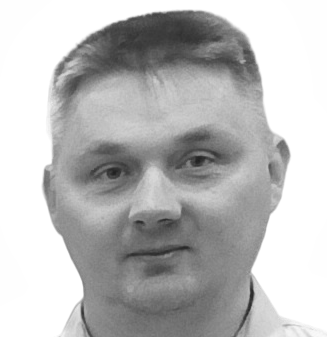
Piotr Ratuszniak
Intel
From FPGA to What’s Next? The Power of Dataflow Processing.
Abstract: FPGA devices are currently widely used for computation acceleration and parallel data processing, including database acceleration such as SQL statements processing and storage engines. Due to their reprogrammable nature, the implemented architecture can be tailored to the specific problem being solved, enabling simultaneous parallel and pipelined processing. FPGAs allow for an almost direct implementation of dataflow graphs, which often results in performance improvement, reduced latency and energy savings, as intermediate data transfers to memory are eliminated. The aim of this lecture is to present selected trends and solutions leveraging dataflow processing.
Bio: Piotr Ratuszniak received his M.S. degree in Electronics and Telecommunications (2001) and Ph.D. in Computer Science (2011) from Koszalin University of Technology, where he has held various academic positions for almost 25 years. Since 2015, he has been working at Intel Technology Poland, contributing to multiple divisions including the Data Center Group and the Programmable Solutions Group. He currently serves as a Research Scientist in the Extreme Scale Computing Group. He has over 20 years of experience with FPGA-based systems and his current research focuses on dataflow architectures in a broad sense.
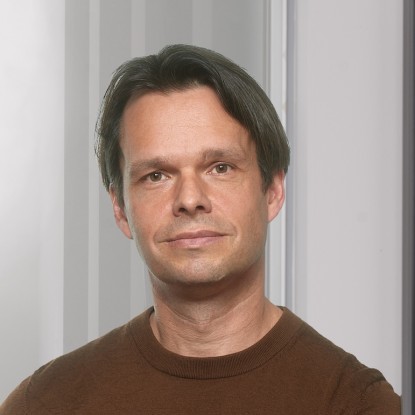
Carsten Binnig
TU Darmstadt
Towards Resource-Efficient Data Systems with Generative AI
Abstract: Generative AI is transforming data systems—not only by enabling new, more intuitive ways to interact with data, but also by changing how data systems themselves are designed and optimized. Yet these opportunities come with a central challenge: AI-enhanced systems can substantially increase computational and energy demands. The talk offers a perspective on how generative AI can both challenge and enable the next generation of sustainable, high-performance data systems. First, I will discuss how generative AI can augment data systems with capabilities such as natural-language interfaces and multimodal querying. While these features make data access more powerful and accessible, incorporating AI models into query execution can significantly raise resource consumption. The talk will examine how established principles from query optimization can be extended to AI-augmented systems to reduce their computational footprint. Second, the talk will consider generative AI as a tool for building more efficient data systems. As code generation becomes inexpensive, there is less need to rely exclusively on one-size-fits-all systems. Instead, data systems can increasingly be specialized for particular workloads. This vision of bespoke database systems—tailored to their intended workloads—can deliver dramatic reductions in resource usage, in some cases by factors of 10 to 100.
Bio: Prof. Dr. Carsten Binnig is a Full Professor in the Department of Computer Science, where he leads the Data and AI Systems group. His research focuses on data management and AI systems, including using AI to optimize data systems and designing systems that support AI workloads. He received his Ph.D. from the University of Heidelberg in 2008 and subsequently worked as a postdoctoral researcher at ETH Zurich and in industry, including work on in-memory database systems. He has also been a visiting researcher with the Google Systems Research Group. Professor Binnig is a founding member of hessian.AI and heads the Systemic AI for Decision Support research area at the German Research Center for Artificial Intelligence (DFKI) in Darmstadt. He has received multiple Best Paper and Best Demo awards at leading database conferences, including ACM SIGMOD, VLDB, and CIDR, and was awarded a LOEWE Top Professorship by the State of Hesse.
Michal Friedman
ETH Zurich
Measuring and Understanding the Energy Cost of Database Systems
Abstract: Database systems underpin nearly every modern data center, yet their energy consumption remains poorly understood. While performance metrics such as latency and throughput have guided database research and engineering for decades, energy efficiency is rarely measured at a level that enables meaningful design and operational decisions. Existing benchmarks typically report only system-wide power consumption, obscuring the energy cost of individual transactions and queries. This talk argues that energy should become a first-class metric for database systems. We will examine how energy can be measured, normalized, and compared across database engines and workloads, and discuss why commonly used benchmarks fail to expose the factors that most strongly influence energy efficiency. Drawing on recent experimental studies of PostgreSQL, MariaDB, and SQLite under standard OLTP and OLAP workloads, we will show that seemingly routine design choices, including storage engine architecture, durability guarantees, indexing strategies, and query optimization decisions, can change energy consumption by more than an order of magnitude. The talk will present practical approaches for measuring database energy consumption and discuss what can be learned once energy is reported per unit of useful work. The results suggest that large energy differences often arise from choices that are invisible in traditional benchmarks, highlighting both the limitations of current evaluation practices and the opportunities for more energy-aware database design.
Bio: Michal Friedman is an Assistant Professor at the Systems Group at the department of Computer Science of ETH Zurich. Her research interests include systems, concurrent computing, programming languages and sustainable computing. Her research focuses on designing system fundamentals, across software and hardware, to improve the performance and efficiency while guaranteeing correctness of next-generation computing platforms and emerging technologies. Prior to that, she did a postdoc at the System Group. She completed her Ph.D. in Computer Science at the Technion, and was generously supported by the Azrieli Foundation Fellowship. During her Ph.D she developed concurrent data structures for non-volatile memories. She completed her BSc summa cum laude at the Computer Science Department at the Technion.

Wolfgang Lehner
TU Dresden
Reproducible Query Optimization Research for Data Systems: What can optimizers do for energy-efficiency?
Abstract: Identifying reasonably good plans to execute complex queries in large data systems is a crucial ingredient for a robust data management platform. The traditional cost-based query optimizer approach enumerates different execution plans for each individual query, assesses each plan based on its costs, and selects the plan that promises the lowest execution costs. However, as we all know, the optimal execution plan is not always selected, opportunities are missed, and complex analytical queries might become prohibitively expensive. Thus, query optimization for data systems is a highly active research area, with novel concepts – mostly embracing AI-inspired techniques – being introduced continuously. Unfortunately, different proposals for alternative cardinality estimations, selection of physical plan operators, etc., are barely quantitatively comparable. Beyond pure comparability of query plans with a one-dimensional optimization goal of performance, current approaches lack the opportunity to systematically investigate the impact of additional optimization goals, like energy efficiency of different plan alternatives. Within this tutorial, we will first motivate and outline PostBOUND, a novel optimizer development and benchmarking framework that enables rapid prototyping and common-ground comparisons, serving as a foundation for reproducible optimizer research. In a second step, we will outline different strategies to investigate optimizer decisions – with a special focus on energy efficiency.
Behind the Data Management Community
Abstract: The data management community is a globally organized family of researchers from academia and industry. Various organizations contribute to the dissemination of research artifacts. In this presentation, I will outline the overall “architecture” of the data management community (different organizations, various publication venues, etc.) and will then provide some more details on the VLDB organization, which I am currently co-leading as part of the executive team. I will provide insights into the inner workings of a community-driven organization, show different community services, and will also outline the challenges the community will face in the near future.
Bio: Wolfgang Lehner is a professor at TU Dresden, leading both the Database Technology Group and the Institute of System Architecture. He is primarily interested in cross-cutting data management themes, ranging from complex analytical tasks and agentic workflows to technologies that push the envelope in compiling and improving the runtime of a data system. He is serving the international database community in various capacities (e.g., Vice-President of the VLDB Endowment, PVLDB Management Editor, and PC Co-Chair/MetaReviewer/Reviewer activities in all top-tier conferences and journals). He is an appointed member of the German Council for the Sciences and Humanities, a member of the Academy of Europe, and a Fellow of the ACM. He also holds a part-time professorship at the University of Aalborg, Denmark.
Tilmann Rabl
University of Potsdam and the Hasso Plattner Institute
Increasing Sustainability in Database Servers
Abstract: Physical limitations are rapidly bringing hardware efficiency improvements to a halt. At the same time, the AI boom is demanding enormous increases in compute capacity. In the search for profit, industry has mostly given up on former goals of carbon neutrality in a global arms race on AI. In this pivotal moment, research is needed to clear up the clouds hiding the true economic, ecologic, and societal costs of current IT trends to open alternative paths for sustainable computing. In this talk, we will discuss current IT trends from an ecological perspective. We will analyze different measures of efficiency of data systems and methods to improve it. Incorporating estimations on hardware and power production carbon intensity, we will estimate ecological impact of hardware and review implications on data system development.
Bio: Tilmann Rabl is a Professor for Data Engineering Systems at the Digital Engineering Faculty of the University of Potsdam and the Hasso Plattner Institute. Tilmann received his doctoral degree at the University of Passau. He was a postdoctoral researcher at the University of Toronto and the Technical University of Berlin. His current research focuses on efficiency of database and ML systems, hardware efficient data processing, benchmarking, and sustainability.